Share
This guide answers the question most Ghanaian advertisers ask first: how much does a billboard cost in Ghana? It explains what drives prices in Accra, Kumasi and regional towns, then compares global prices for context.
“How much does a billboard cost?” is one of the most common questions in advertising, and the honest answer is: it depends. A small poster board on a quiet road in a regional town may cost a modest monthly fee. A large digital screen at a famous city junction can cost more in a day than the small board costs in a year.
This guide explains what you actually pay for, what makes prices go up or down, typical price ranges in some well-documented markets, how to build a realistic budget and how to negotiate a better deal. Use it as a planning tool, then ask media owners for current quotes in your area.
Billboard cost in Ghana: what to expect
Billboard prices in Ghana are not published in a single public rate card, and they change with demand, the cedi exchange rate and the cost of materials, so always ask several media owners for written quotes. What drives the price:
- Location: boards at the busiest Accra junctions, such as Tetteh Quarshie, Circle, Spintex and Airport City, cost far more than boards in smaller towns.
- Format and size: large unipoles and gantries cost more than small roadside boards; LED screen slots are priced by share of time.
- Lighting: lit boards cost more but work after dark.
- Booking length: monthly rates usually fall for three, six or twelve-month bookings.
- Printing and installation: flex printing and flighting are often charged separately. See our guide to billboard printing in Ghana.
- Permits: check whether assembly fees are included.
- Season: demand rises before Christmas, Easter and elections.
How to compare quotes: ask each media owner for the monthly media cost, printing and installation, lighting, the traffic estimate for the site and proof-of-posting photos. Work out the total cost and the cost per thousand impressions (CPM) for each option. Our guide on how to measure billboard ROI in Ghana explains CPM and how to track results, and our guide to renting a billboard as a small business covers cheaper options.
What you pay for: the five parts of billboard cost
When people quote a billboard price, they usually mean the media rental. But a full campaign budget has five parts.
1. Media rental
The fee for using the space for a period of time. Static boards are usually priced per week, per two weeks or per month. Digital screens are priced by slots, plays, days or share of the loop. Rental is normally the largest part of the budget.
2. Production
The cost of printing the ad face. Static boards use printed flex, vinyl, mesh or paper posters, depending on the format and the market. Larger boards need larger prints, and premium materials cost more. Digital screens need no printing, but you may pay for animation or video editing.
3. Installation
Fixing the print to the structure, sometimes called posting or flighting. Some media owners include installation in the rental; others charge per change of artwork. If you change the design during the campaign, you may pay again.
4. Design
Creating the artwork. Some media owners offer basic design for free or for a small fee. Agencies and freelancers charge more for original creative work. Good design matters: an expensive site with weak artwork wastes money.
5. Permits and levies
In many cities, the media owner pays permits and annual fees for the structure. In some places, advertisers pay additional levies or approval fees for specific campaigns, especially for regulated products. Ask who pays what before you sign.
What drives billboard prices
Location
The single biggest factor. Boards in capital cities, central business districts, on main highways and at busy junctions cost far more than those on minor roads or in small towns.
Traffic and audience
Media owners price boards partly by how many people pass them. A board seen by hundreds of thousands of drivers a week commands a higher rate than one seen by a few thousand. Audience quality also matters: boards near airports, business districts and high-income areas cost more.
Size and format
Large bulletins and spectaculars cost more than small posters. Special builds with extensions, cut-outs or 3D elements add production costs.
Visibility
A board with a long, clear approach, good height and no clutter around it is worth more than one partly hidden by trees, buildings or other signs. Lighting also adds value, because illuminated boards work at night.
Static or digital
Digital screens can cost more per site in total, but because several advertisers share a screen, you can often buy a share of a premium location for less than a full static board would cost. See our guide to DOOH advertising for how digital pricing works.
Duration
Longer bookings usually get lower rates per week or month. Many media owners offer discounts for three, six or twelve-month contracts.
Season and demand
Prices rise when demand is high: holiday seasons, election periods, major sports events and end-of-year promotions. Quiet months can bring discounts.
Package size
Buying several boards together, sometimes called a showing or package, often reduces the cost per board.
Typical billboard price ranges
Billboard prices are not published in a standard way in most countries, and rates change often. The ranges below are drawn from commonly published guides in well-documented markets. Use them for rough planning only.
United States
Published US guides commonly describe:
- Small-town and rural boards: a few hundred to a couple of thousand dollars per month.
- Mid-sized city posters and bulletins: often a couple of thousand to several thousand dollars per month.
- Major city bulletins: frequently in the range of several thousand to fifteen thousand dollars or more per month.
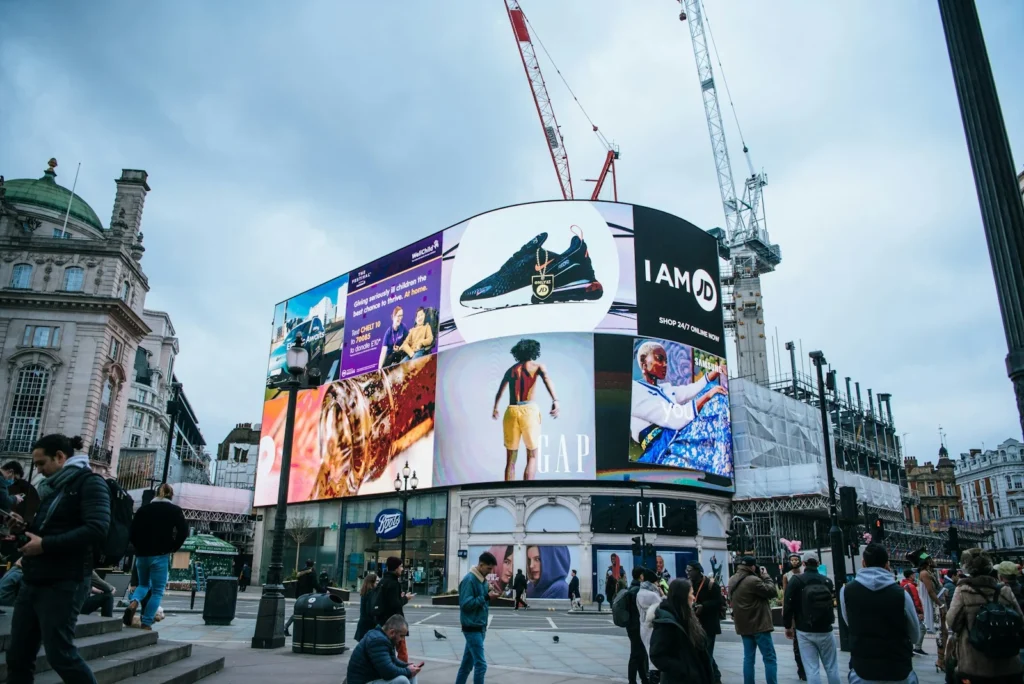
- Landmark locations such as Times Square: much higher, with premium screens priced by the day or week.
Many US media owners quote CPMs (cost per thousand impressions) for billboards in a range that is often lower than many TV and online formats. Our guide to outdoor advertising in the USA covers the American market in more detail.
United Kingdom
UK roadside posters, such as the 48-sheet format, have traditionally been sold in two-week periods, with prices varying widely between London, large cities and smaller towns. Digital roadside screens in central London and on major routes command premium rates. See our guide to outdoor advertising in the UK.
Ghana and West Africa
In Ghana, billboard rates are usually quoted per month, sometimes in cedis and sometimes in US dollars for premium sites. Prices depend heavily on the road, the size of the board and whether it is lit or digital. Boards on major Accra routes and LED screens at busy junctions sit at the top of the market; boards in regional towns cost much less. Because published rate cards are rare, always ask several media owners for quotes on the same area and size. Our guide to outdoor advertising in Ghana explains the local market.
Other markets
In most countries, the pattern is the same: capital cities and main highways cost the most, regional towns cost less, and digital screens price by share of time. Our country guides in the Global Markets section cover individual markets.
Production and installation costs
Production costs depend on the size of the print and the material:
- Paper posters are cheap per sheet but need replacing more often and are mainly used on smaller formats in some markets.
- Flex banners are common in many African and Asian markets: affordable, durable and easy to install.
- Vinyl is tougher and longer lasting, often used on large bulletins.
- Mesh lets wind pass through, used on very large or exposed boards and building wraps.
Larger boards need larger prints, so production can be a noticeable share of the budget on short campaigns. On a one-month booking of a large board, printing and installation might feel expensive relative to rental. On a twelve-month booking with one artwork, they become a small share.
Ask your media owner or printer for:
- The exact print size, including bleed
- The recommended material
- The cost of printing, delivery and installation
- How many changes of artwork are included
- What happens to the old print, which can sometimes be reused or recycled
Design costs
Design costs vary from almost nothing, if you design in-house with a template, to significant fees for an agency campaign. Good billboard design follows a few rules: one idea, few words, a large logo, strong contrast and a clear action. Our guide to billboard copywriting explains how to write lines that work.
If you are using several formats, budget for adapting the design to each size rather than stretching one file.
Digital billboard pricing
Digital screens use different pricing models:
- Per slot per week or month: you buy a fixed share of the loop.
- Per play: you pay each time the ad runs.
- Per day or daypart: you buy certain hours, such as morning rush.
- CPM: you pay per thousand estimated impressions, common in programmatic buying.
To compare digital with static, work out how many times your ad plays per day and the estimated audience, then calculate cost per play and CPM.
Cost by billboard format
Each format sits at a different point on the price scale. From lowest to highest cost per site, a typical order looks like this:
| Format | Typical setting | Relative cost |
|---|---|---|
| Small posters and street boards | Urban streets, local roads | Low |
| Bus shelter panels | Pavements, bus stops | Low to medium |
| Standard roadside boards | Main roads in towns and cities | Medium |
| Large bulletins and unipoles | Highways, major junctions | Medium to high |
| Gantries and rooftop boards | Over roads, city centre buildings | High |
| Digital roadside screens (full ownership) | Major junctions, city centres | High |
| Spectaculars and landmark screens | Famous squares, airports | Very high |
Shared digital slots sit across this range, because you buy only part of the screen’s time. Our guide to the types of billboards explains each format.
What it costs to build your own billboard
Some businesses, landowners and new media owners ask what it costs to build a billboard rather than rent one. The answer depends on several factors:
- Structure type: a simple wall-mounted frame costs far less than a tall steel unipole or a gantry.
- Height and size: taller and larger structures need deeper foundations and more steel.
- Engineering: wind loads, soil conditions and safety standards require proper design.
- Lighting and power: floodlights or LED lighting, plus a power connection or solar system.
- Permits: planning approval, structural approval and annual permit fees.
- Land: buying or leasing the plot, or paying a landowner rent.
- Digital screens: LED panels, controllers and connectivity add a large cost on top of the structure.
Building is a long-term investment that only makes sense if you can sell the space to advertisers or use it for many years yourself. Our guide on how to start a billboard business covers this in detail, and our guide to billboard lease agreements explains land deals.
Billboard cost compared with other media
Comparing media by total cost alone is misleading, because each reaches different numbers of people. CPM, the cost per thousand impressions, makes comparisons fairer.
- Billboards often deliver a low CPM because large numbers of people pass a good site every day, and the ad runs around the clock.
- Television reaches large audiences but has high production and airtime costs.
- Radio can be affordable locally, but listeners are often doing other things.
- Online display and social ads can be targeted precisely, but many impressions are scrolled past or never seen.
- Print reaches engaged readers but audiences have fallen in many markets.
Billboards are strongest for building awareness in a defined area. Online ads are strongest for driving immediate clicks. Many advertisers use both.
Budgeting for a multi-city campaign
National or regional campaigns add a few cost considerations:
- Rate differences between cities. Capital city boards may cost several times more than the same size in a regional town.
- Production logistics. Printing centrally and shipping prints, or printing locally in each city.
- Installation scheduling. Coordinating installers so all boards go up on the same date.
- Monitoring. Arranging proof of posting from every city.
- Agency fees. Agencies often handle multi-city buying and charge a commission or fee.
A common approach is to concentrate budget in the cities that matter most, with a lighter presence elsewhere, rather than spreading evenly.
How to estimate your billboard budget
Here is a simple method.
- Choose your area and goal. For example, increase visits to a new branch within three kilometres.
- Decide the number of boards. One strong board on the main route, or several smaller boards around the area.
- Decide the duration. At least four weeks for awareness; longer for brand building.
- Get quotes for rental, production, installation and design from at least two media owners.
- Add a contingency of around ten per cent for changes or repairs.
- Add tracking costs such as a dedicated phone line or landing page.
Illustrative example
The numbers below are made up to show the method, not real prices.
| Item | Cost |
|---|---|
| Rental: 1 board, 3 months at 2,000 per month | 6,000 |
| Printing: 1 flex face | 600 |
| Installation | 200 |
| Design | 400 |
| Contingency (10%) | 720 |
| Total | 7,920 |
If the media owner estimates 300,000 impressions per month, the campaign delivers about 900,000 impressions over three months. The CPM is roughly 7,920 divided by 900, or about 8.8 per thousand impressions.
How to get a better deal
Ask for several quotes
Compare at least two or three media owners for similar sites. Prices for comparable boards can vary significantly.
Book longer
Three, six or twelve-month bookings often get lower monthly rates.
Be flexible on timing
If your campaign can run in a quieter month, ask for an off-peak rate.
Buy packages
Buying several boards, or combining billboards with shelters or transit, can lower the average cost.
Negotiate extras
Ask for free installation, an extra week, a free artwork change, or illumination included. Media owners sometimes prefer adding value to cutting the headline rate.
Check for unsold space
Media owners may have boards that are empty for a few weeks. Short-notice bookings can be cheaper.
Pay attention to contract terms
Check cancellation clauses, what happens if the board is damaged or unlit, how proof of posting is provided, and whether rates increase on renewal.
When billboard prices rise and fall
Demand for outdoor space follows a yearly rhythm. Knowing it helps you plan and negotiate.
- High demand: the weeks before major holidays, end-of-year shopping, back-to-school periods, big sporting tournaments and election campaigns. Good sites sell out early, and discounts are rare.
- Moderate demand: most of the year, when standard rates and normal negotiation apply.
- Lower demand: the weeks straight after major holidays and other quiet periods in your market. Media owners may offer discounts or added value to fill empty boards.
If your timing is flexible, ask each media owner which months are quietest and what they can offer then. If your campaign must run in a busy season, book well ahead.
Hidden costs to watch for
- Artwork changes charged separately
- Removal fees at the end of the campaign
- Illumination charges on some sites
- Agency commissions if you buy through an agency
- Taxes and levies added to quotes
- Currency changes if quotes are in foreign currency
- Repairs if prints are damaged by weather and the contract makes you responsible
Ask for an all-in price in writing.
Is a billboard worth the cost?
A billboard is worth it if the people who see it are likely customers, the message is clear, the campaign runs long enough and you can track some response. Compare the CPM with your other channels, and look at results rather than cost alone. Our guide on how to measure billboard ROI explains eight practical tracking methods.
For many small businesses, a single well-placed board near their location, combined with good shop signs and local promotion, gives better value than a large board far away. See outdoor advertising for small businesses for budget options.
Alternatives to traditional billboards
If a full billboard is beyond your budget, consider:
- Bus shelter and street furniture ads. See our guide to bus shelter advertising.
- Transit ads on buses, taxis and minibuses. See trotro advertising in Ghana.
- A share of a digital screen instead of a whole board.
- Mobile billboards on a planned route.
- Posters in shops, malls and community spaces.
- Your own premises: shop signs, window graphics and branded vehicles.
Questions to ask before you book
- What is the rental per period, and what does it include?
- What are the production and installation costs?
- Who designs the artwork, and how many changes are allowed?
- Is the board lit, and during which hours?
- What traffic or audience estimates do you have, and how are they measured?
- Can I see photos and visit the site?
- How will you prove the ad is up?
- What happens if the board is damaged or unlit?
- Are permits and taxes included?
- What discounts apply for longer bookings or several sites?
Frequently asked questions
How much does it cost to rent a billboard for a month?
It ranges from a modest amount in small towns to very large sums for premium city sites. Get quotes for your specific area and size.
Is a digital billboard more expensive than a static one?
A whole digital screen in a premium location is expensive, but a share of its loop can cost less than a full static board nearby.
What is a good CPM for a billboard?
It depends on the market, but billboards often deliver a lower CPM than many other media. Compare with your other channels.
Do billboard prices include printing?
Not always. Ask whether production and installation are included or charged separately.
How long should I rent a billboard?
At least four weeks for awareness. Longer bookings usually get better rates and stronger recognition.
Can small businesses afford billboards?
Yes, especially smaller boards in local areas, shared digital screens or short off-peak bookings.
Why do quotes for similar boards differ so much?
Media owners price by location, traffic, visibility, lighting and demand, and some include production and installation while others charge separately. Compare like with like by asking for an all-in price and an audience estimate for each board.
Should I pay a deposit for a billboard booking?
Many media owners ask for part or all of the rental in advance, especially for new clients. Agree the payment schedule in writing, along with what happens if the campaign is delayed or the board becomes unavailable.