Share
Drive from Kotoka International Airport into central Accra, or along the Kumasi to Accra highway, and you will pass almost every type of billboard used in Ghana: towering unipoles at junctions, gantries spanning the road, giant flex wraps on buildings, rooftop boards, LED screens and small roadside signboards. Each format does a different job, costs a different amount and suits different businesses.
This guide explains the different types of billboards in Ghana, how they compare with international formats such as bulletins and 30-sheet posters, where each works best and how to choose the right one for your campaign.
What are the different types of billboards in Ghana?
Billboards in Ghana fall into a few main groups:
- Static billboards with a printed flex or vinyl face: unipoles, double-sided boards, gantries, wall and rooftop boards.
- Digital billboards: LED screens that show several advertisers in rotation.
- Building wraps and wallscapes: large prints covering part or all of a building.
- Small-format roadside boards: signboards and pole signs near shops and junctions.
- Mobile billboards: trucks and vehicles carrying billboard faces.
- Special builds: boards with 3D extensions, cut-outs or unusual shapes.
Unipole billboards
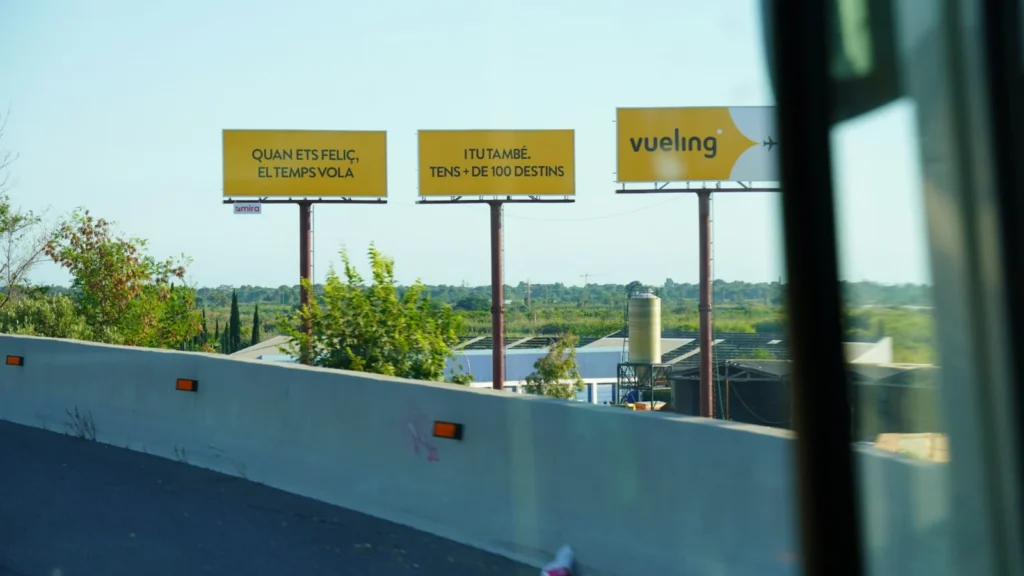
A unipole is a large board mounted on a single tall steel pole, usually beside a highway or at a major junction. It is one of the most common large formats in Ghana and the best-known kind of roadside billboard.
- Visibility: very high, often seen from a long distance.
- Faces: single-sided, double-sided (back to back) or V-shaped, so traffic from different directions sees a face.
- Best for: brand awareness on main roads and highways, such as the N1, the Tema Motorway, the Spintex Road and approaches to Kumasi.
- Cost: among the higher-priced static formats, because of the structure and prime locations.
Gantry billboards
A gantry billboard spans the road on a frame above the traffic, so drivers see it straight ahead. In Ghana, gantries are found on some major roads and at city entrances.
- Visibility: excellent, because the board sits directly in the driver’s line of sight.
- Best for: high-impact brand campaigns.
- Note: gantries over public roads need approval from the relevant road and planning authorities.
Wall and rooftop billboards
Boards fixed to the side of a building or mounted on the roof. Rooftop boards are common in dense commercial areas where there is no space on the ground.
- Visibility: good in busy commercial districts.
- Best for: reaching traffic and pedestrians in city centres such as Adabraka, Kaneshie or Adum.
- Note: the building must be strong enough, and the owner’s lease terms matter. See our guide to billboard lease agreements in Ghana.
Wallscapes and building wraps
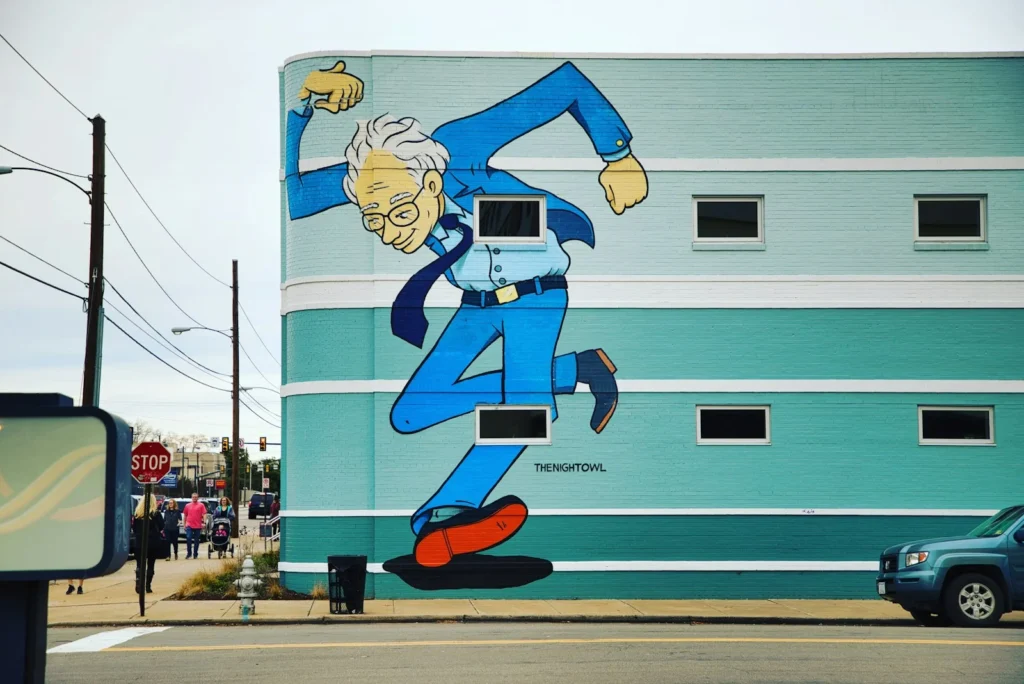
A wallscape is an advert printed and fixed directly onto the side of a building, often very large. A building wrap covers more of the building, sometimes several floors, using mesh so light and air pass through windows.
- Visibility: huge impact, especially on tall buildings at busy junctions.
- Best for: launches and premium brands.
- Note: mesh material is used to reduce wind load and allow light into offices.
Digital LED billboards
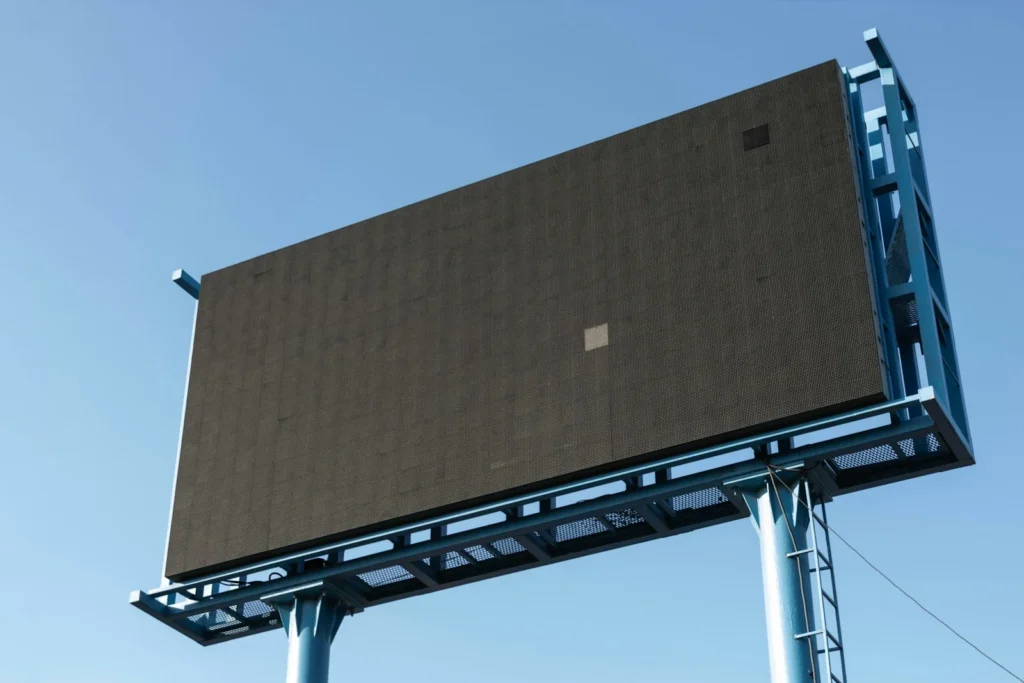
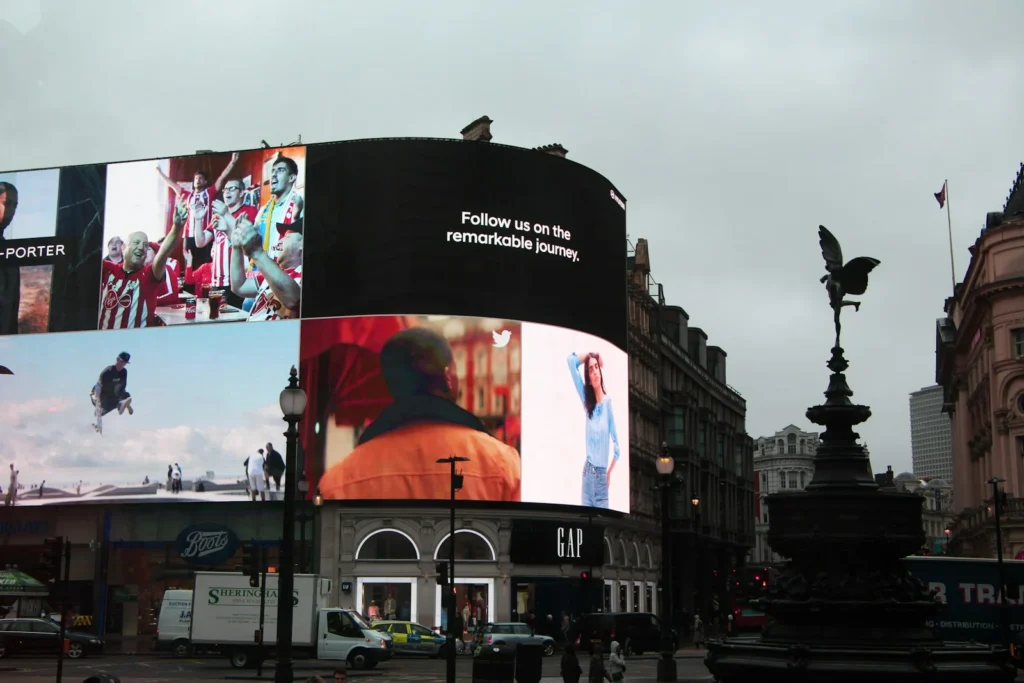
LED billboards show moving or changing ads and rotate several advertisers in a loop. They are increasingly common at Accra and Kumasi’s busiest junctions and in business districts such as Airport City.
- Visibility: bright, eye-catching, visible day and night.
- Flexibility: short bookings and quick message changes.
- Best for: time-sensitive offers, launches, events and brands that want to change creative often.
- Note: your ad shares the screen, so you get a share of time rather than the whole board. Ask about power backup.
See our guide to DOOH advertising in Ghana for how screen time is bought.
Small-format roadside boards
Smaller boards and signboards placed near shops, at junctions and along neighbourhood roads, often showing directions to a business. They are affordable and useful for local businesses such as schools, hotels, churches and hospitals.
Mobile billboards
Trucks with billboard faces on the sides, or LED screen trucks, drive planned routes or park at events. They are useful for launches and for reaching areas without fixed boards. See our guide to trotro and bus branding in Ghana for other transit options.
Special builds and extensions
Some campaigns add 3D objects, cut-outs that extend beyond the frame, lights or moving parts to a board. These attract attention and media coverage, but cost more and need careful engineering.
International formats: bulletins and 30-sheet posters
You will often read about formats from the USA and UK. In Ghana the names differ, but the ideas are similar:
| International format | Typical size | Closest Ghana equivalent |
|---|---|---|
| Bulletin billboard (USA) | 14 x 48 feet (about 4.3 x 14.6 m) | Large unipole or highway board |
| 30-sheet poster (USA) | About 10 x 22 feet | Medium roadside board |
| 8-sheet poster (USA) | About 5 x 11 feet | Small roadside or neighbourhood board |
| 48-sheet (UK) | About 6 x 3 m | Standard roadside board |
| 96-sheet (UK) | About 12 x 3 m | Large roadside board |
| Wallscape | Varies | Building wall board or wrap |
| Gantry billboard | Varies | Gantry over the road |
Billboard sizes in Ghana vary between media owners, so always ask for exact dimensions and the visible area before designing. Our guides to outdoor advertising in the USA and the UK explain those markets’ standard formats.
Static or digital: which suits your campaign?
Choosing between a static board and an LED screen is one of the first decisions for most advertisers in Ghana. A static board gives you the whole face, all day and all night, for the full booking period. People who pass every day see your message every time, which builds familiarity. It suits brand campaigns, long-running offers and businesses that want to “own” a location.
An LED screen gives you a share of time, usually a slot of several seconds that repeats throughout the day alongside other advertisers. In return you get brightness, movement, the ability to change messages quickly and shorter minimum bookings. It suits launches, events, promotions with deadlines and brands that run several messages.
Many campaigns use both: a static unipole on a highway for constant presence, and LED screens at busy junctions for timely offers. Our guide to digital signage in Ghana covers indoor screens for shops and offices.
Comparing billboard types
| Type | Impact | Flexibility | Relative cost | Best for |
|---|---|---|---|---|
| Unipole | Very high | Low | High | Brand awareness on highways |
| Gantry | Very high | Low | High | Major launches |
| Wall and rooftop | High | Low | Medium | City centre visibility |
| Wallscape and wrap | Very high | Low | High | Premium launches |
| LED screen | High | Very high | Medium to high | Offers, events, short campaigns |
| Small roadside board | Medium | Medium | Low | Local businesses, directions |
| Mobile billboard | Medium | High | Medium | Launches, events, routes |
How to choose the right billboard type
- Start with your goal. Brand awareness suits large unipoles, gantries and wraps. Local footfall suits smaller boards near your business. Short offers suit LED screens.
- Think about your audience. Drivers on highways, pedestrians in town, commuters at junctions?
- Check the location first. The right place matters more than the format. Visit the site at different times of day.
- Consider timing. Static boards suit campaigns of a month or more; LED screens allow shorter bookings.
- Compare total cost, including printing, installation and permits. See our billboard cost guide for Ghana.
- Plan the creative for the format. A wide unipole and a portrait screen need different layouts. See our guide to writing billboard copy.
Where each billboard type works best in Ghana
Different parts of Ghana’s road network suit different formats:
- Highways and motorways, such as the Accra to Kumasi road, the Tema Motorway and the Accra to Cape Coast road, suit large unipoles that drivers can see from far away at speed.
- Major junctions and interchanges, such as Tetteh Quarshie, Kwame Nkrumah Circle, Kasoa and Kejetia, suit LED screens, gantries and large unipoles, because traffic slows and people look around.
- City centres and markets, such as Makola, Adabraka, Kaneshie and Adum, suit wall and rooftop boards and wallscapes visible to dense crowds.
- Business districts, such as Airport City and Ridge, suit LED screens and premium static boards that reach professionals.
- Neighbourhood roads suit small roadside boards and directional signs for local businesses.
- Regional towns such as Takoradi, Tamale, Ho, Cape Coast and Sunyani often offer lower costs per board, with strong visibility on the few main roads into town.
Lighting and night visibility
Many people in Ghana travel early in the morning and after dark, so lighting makes a big difference:
- Front-lit static boards use floodlights or LED bars fixed above or below the face. Ask whether lighting is included and how many hours a night it runs.
- Backlit boards use translucent material lit from behind. They look sharp at night but cost more.
- LED screens are visible day and night, but depend on a reliable power supply.
Power outages affect lighting, so ask the media owner whether the site has backup power or solar lighting, and check the board yourself at night during the campaign.
Printing materials for static billboards
Most static billboards in Ghana use printed flex, which is affordable and durable. Vinyl is used for higher quality and longer campaigns, and mesh for building wraps and windy sites. See our guide to billboard printing in Ghana for a full comparison.
Permits and safety
Billboard structures in Ghana need approval from the metropolitan, municipal or district assembly, and sites near highways may also involve road authorities. Media owners usually hold the permits for their sites. If you are building your own board, our guide on how to start a billboard business in Ghana explains the process. Structures must be engineered to withstand strong winds and rainstorms.
Frequently asked questions
What are the different types of billboards?
The main types are unipoles, gantries, wall and rooftop boards, wallscapes and building wraps, LED digital billboards, small roadside boards, mobile billboards and special builds.
What is the most common billboard in Ghana?
Large static boards with printed flex faces, especially unipoles and roadside boards, are the most common. LED screens are growing in major cities.
What is a bulletin billboard?
A large US roadside format, typically 14 by 48 feet, placed on highways and major roads. In Ghana, large unipoles do a similar job.
What is a 30-sheet poster?
A medium-size US roadside format, about 10 by 22 feet, often used on urban streets.
Which billboard type is best for a small business?
Usually a smaller roadside board near the business or a short LED screen booking, rather than a large highway unipole.
How long do billboard campaigns run in Ghana?
Static boards are usually rented by the month, and many advertisers book three, six or twelve months for a lower rate. LED screens can often be booked for shorter periods, such as a week or a weekend, which suits events and short offers. Ask media owners about their minimum booking and the discount for longer periods.
Who owns billboards in Ghana?
Most large boards are owned by outdoor media companies that hold the site leases and permits and rent the faces to advertisers. Some businesses and landowners also own boards on their own property.
Are LED billboards better than static billboards?
Not always. LED screens offer flexibility and brightness but you share the time with other advertisers. Static boards give you the whole face all day. The best choice depends on your goal, budget and campaign length.