
Share
This guide is written first for advertisers in Ghana, where malls, banks, campuses, hospitals and cinemas offer growing indoor media, and then explains how place-based media works worldwide.
Place-based media is advertising inside the venues where people spend part of their day: shopping malls, supermarkets, gyms, offices, lifts, cinemas, airports, universities, clinics, restaurants, bars and stadiums. It includes posters, digital screens, floor graphics, sponsored displays and activations, placed where a specific audience gathers.
The industry treats place-based media as part of out-of-home advertising, because it reaches people away from home. The difference from roadside outdoor advertising is the setting. Instead of catching drivers at speed, place-based ads reach people who are walking, waiting, working out, queuing or relaxing, often for minutes rather than seconds.
This guide explains how place-based media works, the main venue types, how to plan and buy it, what it costs and how to measure the results.
Place-based media in Ghana
Place-based media in Ghana has grown with the country’s malls, banking halls, private hospitals and universities. Venues you can reach include:
- Malls: Accra Mall, West Hills Mall, Achimota Retail Centre, Junction Mall, Kumasi City Mall and others, with screens, banners, floor graphics and activation spaces.
- Banking halls and fuel stations: screens and posters where customers queue.
- Hospitals, clinics and pharmacies: waiting-room screens and posters, suited to health and family brands, subject to advertising rules for health products.
- Campuses: universities such as the University of Ghana at Legon and KNUST in Kumasi, plus senior high schools for appropriate brands.
- Cinemas, gyms, hotels, airports and event centres.
Practical tips for Ghana:
- Ask how screens are powered and what happens during outages.
- Ask for proof: photos of posters in place and play logs for screens.
- Check venue rules, especially in hospitals and schools, where some products cannot be advertised.
- Combine with activations. In malls and campuses, a sampling stand next to your screen ad turns attention into trial.
Our guide to experiential marketing in Ghana covers activations, and our guide to digital signage in Ghana covers screens in your own premises.
Why place-based media works
Defined audiences
Each venue attracts a recognisable group. University screens reach students. Office lift screens reach professionals. Gym screens reach health-conscious adults. Maternity clinic posters reach expecting parents. This makes place-based media one of the most targeted forms of out-of-home.
Longer dwell time
People in a waiting room, queue, lift or gym spend time in the same spot. That gives ads more time to be noticed and read than a roadside billboard passed at speed.
Relevant moments
Venues create natural context. A sports drink ad in a gym, a mortgage ad in a property exhibition, a phone plan ad in a mall near the network’s store, or a snack ad in a cinema lobby all meet people at a moment when the product makes sense.
Fewer distractions
Indoor spaces are often calmer than streets. A screen in a lift or a poster in a washroom has little competition for attention.
Closeness to purchase
Many venues, especially malls and supermarkets, put ads within metres of the place where people buy. This makes place-based media a strong tool for promotions, launches and retail sales.
The main types of place-based media
Shopping malls and centres
Malls offer some of the most varied place-based formats:
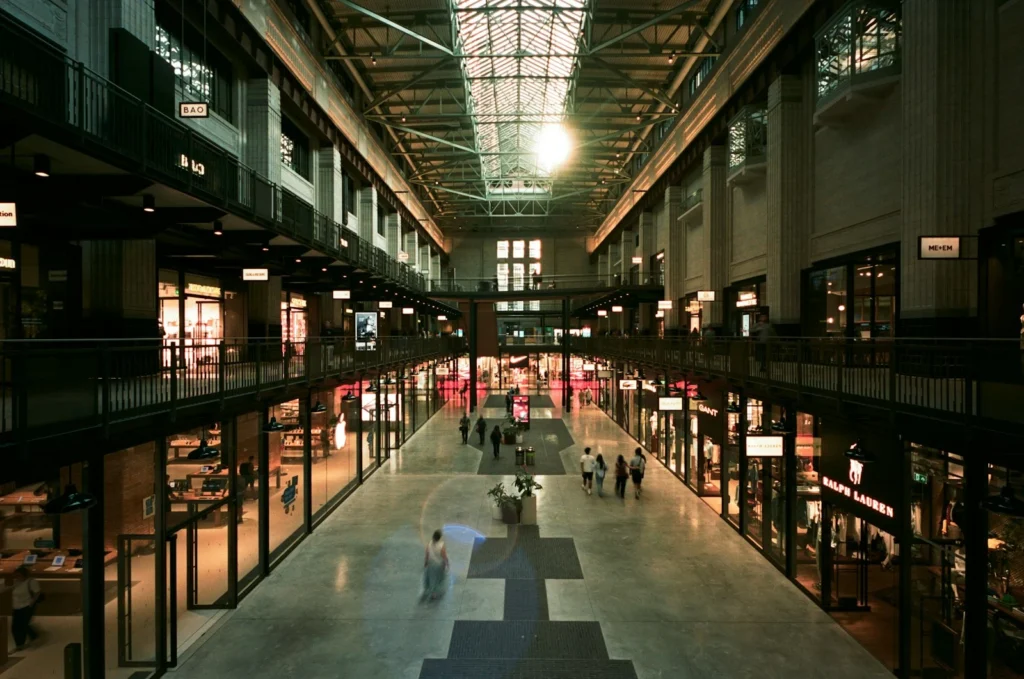
- Digital screens and totems along walkways and food courts
- Large banners in atriums
- Escalator and lift wraps
- Floor graphics
- Sponsored seating areas and charging stations
- Activation spaces for product demonstrations and sampling
Mall audiences are in a shopping mindset, which makes them valuable for retail brands, telecoms, banks and fast-moving consumer goods.
Supermarkets and retail stores
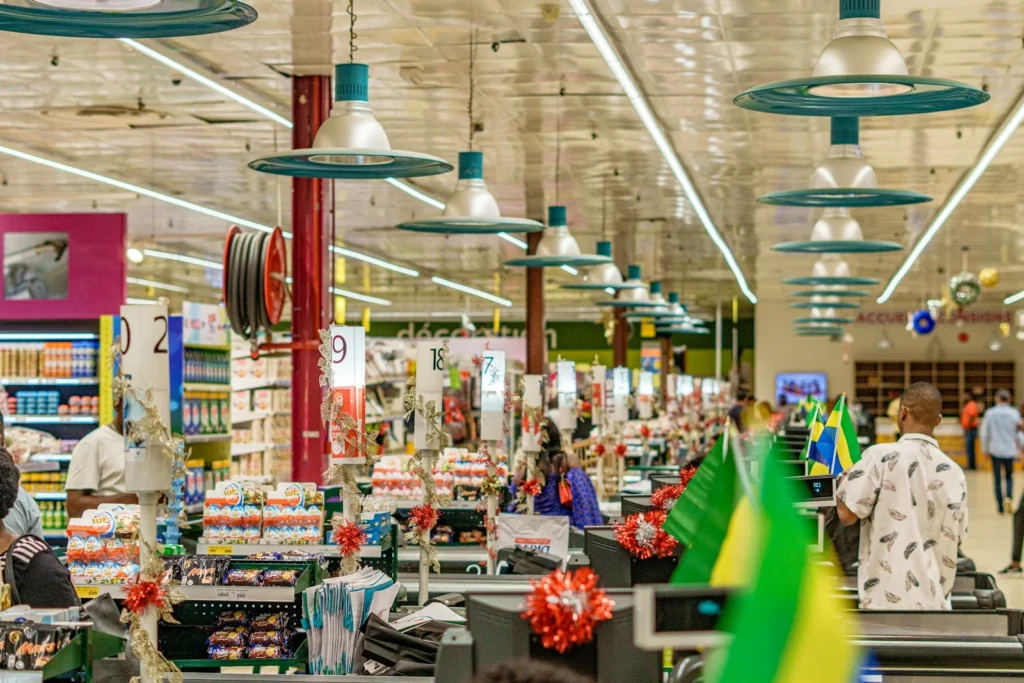
In-store media includes trolley ads, shelf talkers, floor stickers, aisle screens, end-of-aisle displays and checkout screens. This area overlaps with retail media, where retailers sell advertising to brands on their screens, shelves and websites. Our guide to window display ideas covers the retailer’s own displays.
Office buildings and lifts
Office and lift screens reach working professionals, often several times a day. Content frequently mixes news, weather and short ads, which keeps viewers looking. These networks suit banks, insurance companies, business services, cars, telecoms and premium consumer brands.
Gyms and fitness centres
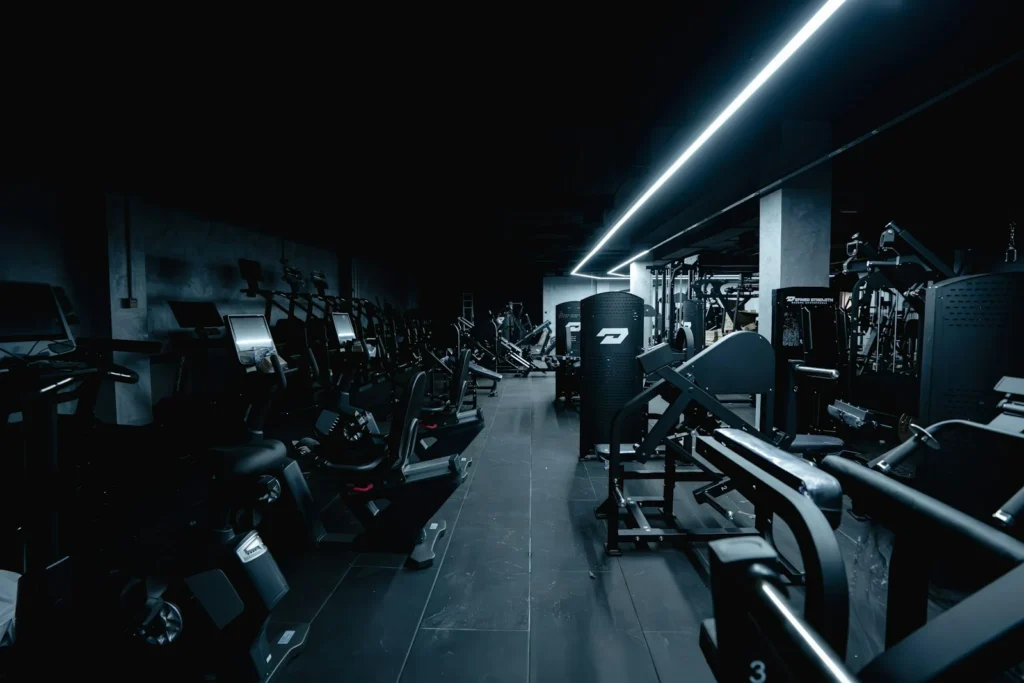
Gym screens, posters in changing rooms and sponsored equipment reach active adults. Sports nutrition, sportswear, health insurance and wellness brands often use these networks. Many members visit several times a week, which builds strong frequency.
Cinemas
Cinema advertising includes on-screen ads before films, lobby screens, posters, branded popcorn boxes and sponsored premieres. On-screen cinema ads offer a large screen, full sound and an audience that has chosen to sit and watch, which makes them memorable.
Airports
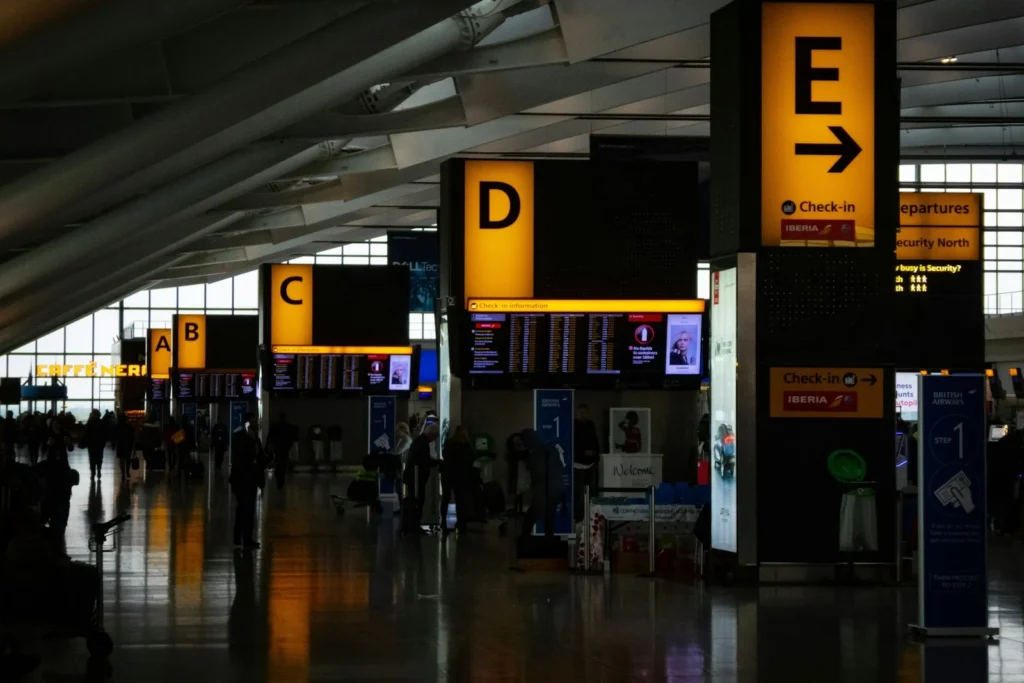
Airports offer screens and posters across terminals, check-in halls, lounges, gates and baggage reclaim. Travellers often wait for long periods, and frequent flyers tend to be high-income professionals. Airports suit premium brands, financial services, tourism and technology companies.
Universities and schools
Campus media includes screens in student centres, posters on noticeboards, sponsored events and sampling. Brands use campuses to reach young adults at the start of long-term buying habits, such as banking, mobile networks and technology. Rules for advertising in schools are often strict, especially for younger children, so check policies carefully.
Health clinics, hospitals and pharmacies
Waiting room screens and posters reach patients and families. Content is usually health-related and closely regulated. Health insurers, pharmaceutical companies (within the rules), baby products and wellness services use these networks.
Restaurants, bars and nightlife
Screens and posters in restaurants, bars and clubs reach social audiences. Drinks brands, entertainment, ride-hailing and telecoms are common advertisers. Alcohol advertising is restricted in many countries, so check what is allowed.
Washrooms
Posters and small screens in washrooms in malls, bars, stadiums and offices offer a captive audience with very little distraction. They are often used for health messages, personal care products and entertainment.
Stadiums and sports venues
Perimeter boards, LED ribbons, scoreboards, concourse screens and naming rights reach large crowds and television audiences. These formats overlap with sponsorship and usually require longer-term deals.
Petrol stations and convenience stores
Pump-top screens, forecourt posters and in-store displays reach drivers at a moment when they pause for a few minutes. Car care, snacks, drinks, telecoms and insurance often use them.
Transport hubs
Bus terminals, train stations and ferry ports are often classed as transit media, but their screens and posters work in a similar way to other place-based networks: people waiting, with time to look.
Place-based media versus outdoor billboards
| Place-based media | Roadside billboards |
|---|---|
| Reaches specific venue audiences | Reaches broad passing traffic |
| Longer dwell time, often minutes | Short viewing time, seconds |
| Eye-level formats, close viewing | Large formats, long viewing distance |
| Often near the point of purchase | Often far from where people buy |
| Easier to change with digital screens | Static boards need reprinting |
| Smaller audiences per site | Very large audiences on main roads |
Many campaigns use both. Billboards build broad awareness; place-based media reaches the right people closer to the decision.
How place-based networks are sold
Most place-based media is sold as a network: a group of venues of the same type, managed by one media company. For example, a company may install screens in hundreds of gyms or office lifts and sell advertising across all of them. Buyers can book the whole network or choose by city, area or venue.
Other formats, such as mall atrium banners or stadium boards, are sold by the venue owner directly or by a media company with exclusive rights.
Pricing models
- Package or flat rate: a fixed price for a set of venues and dates.
- Cost per screen per week: common for digital networks.
- Share of loop: your share of the screen rotation, as with DOOH advertising.
- CPM: cost per thousand estimated impressions, increasingly common.
- Sponsorship fees: for naming rights, branded areas or exclusive presence.
Prices vary widely with venue type, audience quality and city. Premium airports and central malls cost more than suburban gyms or regional campuses. Always ask what is included: production, installation, reporting and any activation space.
How to plan a place-based campaign
Step 1: Start with the audience
Describe your ideal customer. Where do they spend time each week? Office workers, students, parents, gym members, travellers or shoppers will lead you to different venues.
Step 2: Match venues to the message
A launch for a new mobile data plan might use mall screens, university campuses and transport hubs. A premium car might use airports, business lounges and office lifts. A baby product might use clinics and supermarkets.
Step 3: Choose formats
Decide between posters, screens, sampling, displays and sponsorships. Digital screens offer flexibility; posters give constant presence; activations give interaction.
Step 4: Plan timing
Some venues have peak times: malls at weekends and month-end, gyms in the early morning and evening, offices on weekdays, cinemas at weekends and holidays. Schedule digital plays to match.
Step 5: Create content for the setting
Use the extra dwell time. A lift screen can carry a short message with a QR code. A gym screen can show a 15-second video without sound. A clinic poster can explain a service in a few lines. Still keep the headline short, so people who glance once still understand. Our guide to billboard copywriting explains how to write short, strong lines.
Step 6: Add a response path
Because people have time, QR codes, short web addresses and promo codes work better indoors than on fast roads. Give one clear action.
Step 7: Visit before you book
Visit sample venues. Check where screens are placed, whether they work, how bright they are and whether people actually look at them.
Creative tips for indoor ads
- Design for eye level. Indoor formats are seen close up, so image quality and fine detail matter more than on a distant billboard.
- Use the context. A gym ad can mention the workout; a lift ad can mention the commute; a mall ad can point to a store on the same floor.
- Plan for silence. Most screens play without sound. Use captions.
- Make the call to action easy. A large QR code linking to a mobile-friendly page, or a short phone or WhatsApp number.
- Respect the venue. Clinics, schools and places of worship need sensitive content. Bright, loud ads can feel out of place.
Measuring place-based media
Measurement depends on the network:
- Venue footfall: malls, airports and stadiums count visitors.
- Proof of play: digital networks report when and where ads ran.
- Audience estimates: some networks use anonymous sensors or mobile location data to estimate viewers.
- Response tracking: QR scans, promo codes, short web addresses and dedicated phone numbers.
- Sales comparisons: compare sales in stores near participating venues with those without.
- Brand surveys: ask venue visitors what they recall.
Our guide on how to measure billboard ROI explains these methods in detail.
Place-based media for small businesses
You do not need a national budget to use indoor advertising. Small businesses can:
- Advertise on screens in the local mall where they have a store.
- Place posters in nearby gyms, salons and cafés, sometimes in exchange for promoting those businesses in return.
- Sponsor a local football match, school event or church programme with banners and branded items.
- Book sampling days in supermarkets.
- Use their own in-store screens to promote offers. See our guide to digital signage for business.
Start with venues within easy reach of your location and track responses before expanding. Our guide to outdoor advertising for small businesses has more low-cost ideas.
Activations and sampling inside venues
Place-based media is not only screens and posters. Many venues rent floor space for live brand activity:
- Sampling stands in malls and supermarkets, where people taste or try a product.
- Demonstration areas for phones, appliances, cars or beauty products.
- Pop-up shops in mall atriums or campus squares for a few days.
- Sign-up desks for banking, insurance or mobile services.
- Competitions and games that collect entries in exchange for prizes.
Activations work best when they are linked to the venue’s screens and posters. A shopper who sees a mall screen promoting a free tasting on the ground floor is more likely to walk over. Our guide to roll-up banners and pop-up displays covers the display kit most activations need, and our experiential marketing guide explains how to plan the live side.
When booking activation space, ask about power points, storage, setup times, security, staff passes and rules on music, food handling and data collection.
Working directly with venue owners
Not every venue belongs to a network. Many independent venues will sell advertising space directly, especially to local businesses. Examples include:
- A private hospital that allows posters in its waiting area
- A gym that sells sponsorship of its class timetable screens
- A cinema that offers local on-screen ads before films
- A church or community centre that accepts banners during events
- A university student union that sells space at fresher events
Direct deals can be cheaper and more flexible than network bookings. Put the agreement in writing: what space you get, for how long, who produces and installs the material, who maintains it and what happens if the venue closes or changes its rules. Offer something the venue values, such as cross-promotion, discounts for its members or sponsorship of an event.
Place-based media in Africa and Ghana
Across African cities, indoor advertising is growing alongside new malls, office towers, private hospitals and universities. In Ghana, for example, malls in Accra and Kumasi carry screens, banners and activation spaces, while campuses, churches and event venues host banners, sponsored programmes and sampling. Many of the most effective indoor campaigns in the region combine a small amount of paid media with strong on-the-ground activity, such as staff in branded shirts, sampling and instant sign-ups.
Because formal audience data is still limited in many African markets, ask venues for footfall counts, membership numbers or event attendance, and use promo codes and sign-up counts to measure results. Our guide to outdoor advertising in Ghana covers the wider local market.
Budgeting for place-based media
A place-based budget usually includes:
- Media fees for screens, posters or space.
- Production of posters, floor graphics, video files and display units.
- Installation and removal of printed materials.
- Activation costs such as staff, samples, transport and stands.
- Venue charges for power, security or cleaning during activations.
- Measurement such as QR code tools, landing pages and surveys.
Start with a test in a small number of venues. Compare cost per sign-up, sale or lead with your other channels, then expand the venues that perform best. A smaller, well-chosen set of venues often beats a thin spread across a large network.
Rules and sensitivities
Place-based media is subject to the same advertising standards as other media, plus venue rules. Common points include:
- Alcohol and gambling advertising is restricted or banned in many venues and countries.
- Health claims in clinics and pharmacies must follow medical advertising rules.
- Children’s venues such as schools often restrict or ban commercial advertising.
- Religious venues have their own standards.
- Data collection by screens with cameras or sensors must follow privacy laws.
Venue owners usually approve all content before it runs. Allow time for approvals in your schedule.
Questions to ask a place-based media owner
- Which venues are in the network, and can I see a full list with addresses?
- How many people visit each venue per week, and how is that counted?
- Where exactly are the screens or posters placed inside each venue?
- For screens: how long is the loop, how many advertisers share it, and what are the operating hours?
- What audience profile do you have for the venues, such as age, income or occupation?
- What proof of display do you provide: photos, play logs or both?
- What content rules apply, and how long do venue approvals take?
- Can I book only certain cities or venue types?
- Are activations or sampling available alongside the media?
- What discounts apply for longer bookings or larger packages?
The answers make it easier to compare networks fairly and avoid surprises after booking.
The future of indoor advertising
Indoor networks are moving quickly toward digital screens, programmatic buying and better audience data. Retailers are building their own media networks, using in-store screens to sell advertising to the brands on their shelves. Interactive formats, sampling machines and mobile-linked campaigns are blending physical and digital experiences. As measurement improves, place-based media is becoming easier to compare directly with online channels.
Common mistakes to avoid
- Choosing venues by price alone. A cheap network that does not reach your audience wastes money.
- Ignoring venue context. An ad that ignores where it appears misses its biggest advantage.
- Reusing roadside creative. Close-up indoor formats deserve more detail and a stronger call to action.
- Forgetting approvals. Venues may reject content late, so submit early.
- No tracking. Indoor audiences can respond easily, so give them a way.
A sample plan
A bank launching a student account might plan:
- Screens on five university campuses during the first month of term.
- Posters in student hostels and cafés near campuses.
- A sampling stand on each campus with branded items and instant sign-up.
- Mall screens near the bank’s branches on weekends.
- A QR code and short web address on every format, tracked separately.
After four weeks, the bank compares sign-ups by campus and format and moves budget to the venues that perform best.
Frequently asked questions
What is place-based media?
Advertising placed in specific venues where people spend time, such as malls, gyms, offices, cinemas, airports and clinics.
Is place-based media the same as indoor advertising?
Mostly yes. Place-based media covers indoor venues and some semi-outdoor spaces such as petrol station forecourts and stadiums.
How is place-based media different from DOOH?
DOOH refers to digital screens in any public place. Place-based media refers to venues, and can include printed posters, screens, displays and sponsorships.
Is place-based media expensive?
It varies widely. Airport and premium mall formats cost more, while local gyms, cafés and campuses can be affordable for small businesses.
What industries use place-based media most?
Telecoms, banks, retail, fast-moving consumer goods, entertainment, health and education are among the most common users.
Can I measure indoor advertising?
Yes. Use proof-of-play reports, venue footfall, QR codes, promo codes, sales comparisons and surveys.
How long should a place-based campaign run?
Plan at least two to four weeks so regular visitors, such as gym members or office workers, see the ad several times. Venue audiences repeat often, which builds frequency quickly.
Do QR codes work on indoor ads?
Better than on most roadside formats. People standing in lifts, queues and waiting rooms have time to scan. Make the code large and link to a fast, mobile-friendly page.