Share
This is our main guide to outdoor advertising in Ghana, the home market Outdoor Advertising HQ is written for first.
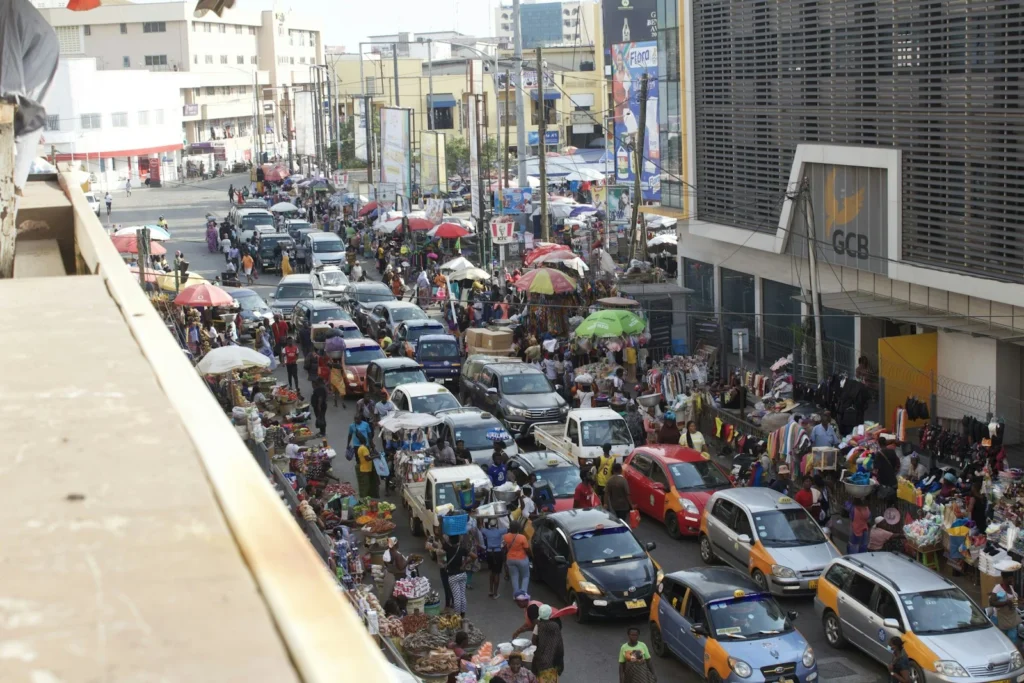
Outdoor advertising is one of the most visible parts of daily life in Ghana. Drive through Accra and you pass giant billboards on the motorway, LED screens at busy junctions, branded trotros, painted shop walls, banners announcing church programmes and funerals, and kiosks wrapped in the colours of mobile networks. In smaller towns, the same brands appear on painted walls, umbrellas, market stalls and announcement vans.
For businesses, this makes outdoor one of the most important ways to reach Ghanaian customers. It works across languages, reaches people who spend hours in traffic and on the street, and builds the kind of visible presence that customers trust.
This guide explains how the Ghanaian outdoor market works, the main formats, where to advertise, the rules and permits, costs, creative tips for local audiences and how to plan and measure a campaign.
Quick facts for advertisers in Ghana
- Main cities: Accra, Kumasi, Takoradi, Tamale, Cape Coast, Ho and Sunyani each have different traffic patterns, media options and costs.
- Main formats: unipoles and roadside boards, LED screens, trotro and vehicle branding, street pole banners, shop signs, activations and indoor screens.
- Who approves sites: metropolitan, municipal and district assemblies, with road authorities involved near highways.
- Who approves some content: the Food and Drugs Authority for food, drugs, cosmetics and alcohol adverts.
- How to track results: WhatsApp numbers, mobile money references and promo codes. See our guide on how to measure billboard ROI.
- Busiest seasons: Christmas, Easter, back-to-school in January and September, and election periods, when premium sites sell out early.
- Biggest local advantages: lower costs than most international markets, strong trust in community media, and audiences who spend long periods in traffic and at markets where they see outdoor ads.
- Biggest challenges: power outages for lit boards and screens, limited audience measurement, and unauthorised boards that crowd some junctions.
- Where to start: a clear shop sign and low-cost local tactics, then billboards or LED screens near your customers. See our guide to outdoor advertising for small businesses in Ghana.
Why outdoor advertising works in Ghana
People spend time outdoors and in traffic
Many Ghanaians commute by trotro, taxi, bus or private car, often through heavy traffic in Accra, Kumasi and other cities. Markets, lorry stations, roadside shops and street trading keep people outside for large parts of the day. That creates long, repeated exposure to outdoor ads.
It reaches across languages and literacy levels
Strong images, colours and short words can communicate to audiences who speak English, Twi, Ga, Ewe, Dagbani, Hausa and many other languages. Outdoor creative can also use local languages and expressions to connect more deeply.
Visible presence builds trust
For many customers, a brand with big boards, branded vehicles and painted shops looks established and reliable. This matters in categories such as banking, insurance, telecoms, schools and real estate.
It complements radio and mobile
Radio remains powerful in Ghana, and mobile phone use is high. Outdoor works alongside both: the billboard creates recognition, radio explains the offer, and mobile money or WhatsApp makes it easy to respond.
The main outdoor formats in Ghana
Roadside billboards
Large boards line the main roads in and out of Accra and other cities, including the motorways, ring roads and major arterial roads. Common types include large bulletins on steel structures, unipoles, wall-mounted boards and gantries. Boards range from large premium faces on major highways to smaller boards on secondary roads and in regional towns. Our guide to the types of billboards explains each format.
LED screens
Digital LED screens have spread at major junctions, interchanges and commercial centres, especially in Accra and Kumasi. They rotate several advertisers and allow messages to change quickly, which suits promotions, events and time-sensitive campaigns. See our guide to LED screen and DOOH advertising.
Transit advertising
Branded trotros, buses, taxis and private company vehicles carry ads across cities and between towns. Trotro branding is especially effective because the vehicles travel busy routes all day and stop often at stations. Our full guide to trotro advertising in Ghana covers costs and how to work with owners and drivers.
Wall painting and shop branding
Painting a shop, kiosk or wall in brand colours is one of the most widespread forms of outdoor advertising in Ghana. Telecoms, paint companies, drinks brands and consumer goods companies often brand thousands of small shops and kiosks, giving them a strong presence in every neighbourhood. Our guide to shop branding and signage in Ghana covers local providers and prices.
Shop signs and signboards
Businesses use signboards, lightboxes, 3D letters and printed flex signs to mark their premises. A good sign works as a permanent ad. See our guide to shop signs.
Banners and posters
Flex banners announce church programmes, school events, funerals, concerts, product promotions and political messages. Posters appear on walls, poles and noticeboards. Banners are cheap to print and fast to produce. Our guide to banner printing in Ghana explains materials and prices.
Announcement vans and roadshows
Vehicles fitted with speakers, branding and sometimes stages travel through neighbourhoods and towns, playing jingles and announcements. Roadshows combine music, games, sampling and sales. These are common for telecoms, drinks, consumer goods, health campaigns and events. See our guide to local advertising in Ghana.
Street furniture and kiosks
Bus shelters, footbridge banners, kiosks and street signs carry ads in some urban areas. Footbridges on busy roads are popular because they face oncoming traffic at eye level.
Indoor and place-based media
Malls, supermarkets, banks, hospitals, campuses, cinemas and the airport offer screens, posters and activation space. See our guide to place-based media.
Branded items
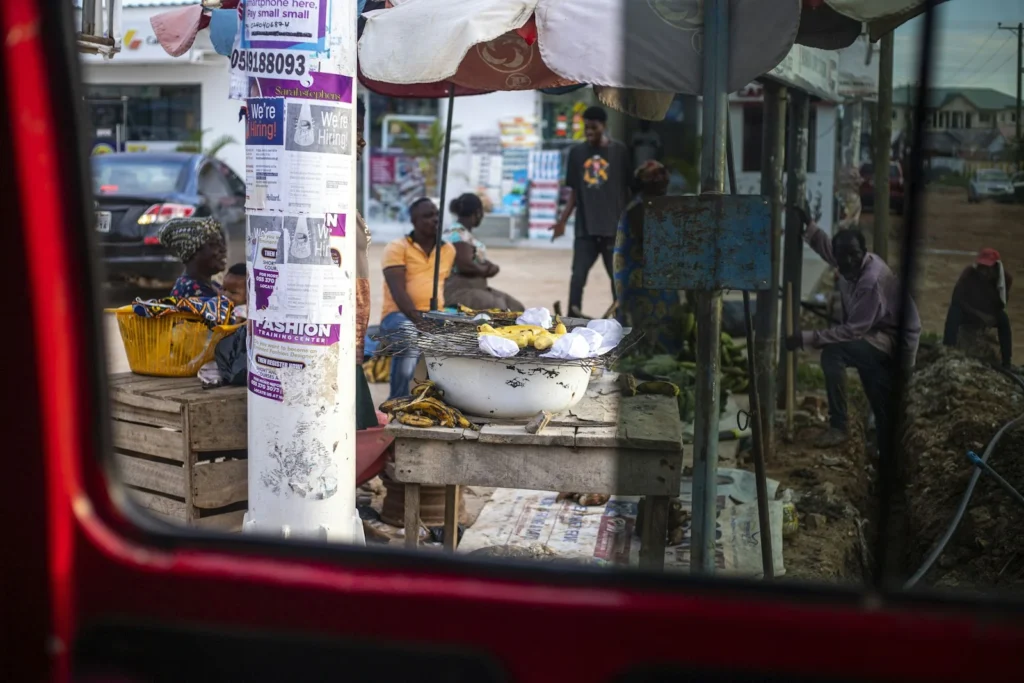
Umbrellas, canopies, aprons, caps, T-shirts and tables given to traders and shop owners carry brand logos into markets and roadsides every day.
Where to advertise: cities and regions
Accra and Tema
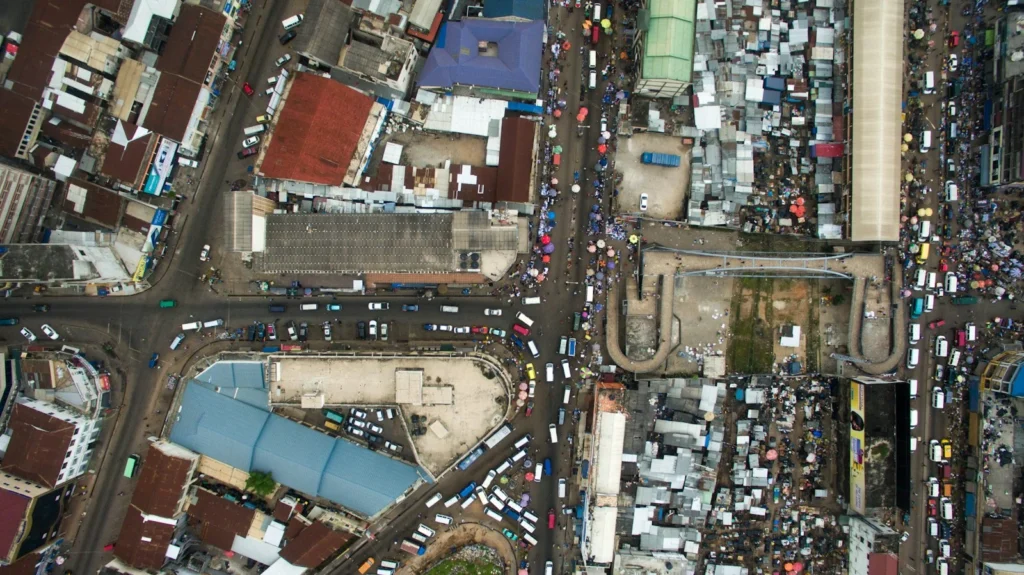
Greater Accra is the largest and most competitive outdoor market. Key areas include the motorway and main arterial roads, the major interchanges and circles, the airport area, central business districts, Spintex and Tema. Heavy traffic increases viewing time but also competition, so creative must stand out.
Kumasi
Ghana’s second city is a major commercial centre, with large markets and busy roads. Kejetia and Adum are commercial hubs, and main roads into the city carry heavy traffic. Kumasi is important for brands targeting the Ashanti Region and northern trade routes.
Takoradi and the Western Region
Sekondi-Takoradi combines a port, oil and gas activity and a growing population. Outdoor here reaches business travellers, workers and local residents.
Cape Coast and the Central Region
A university town and tourist centre, Cape Coast suits education, tourism, telecoms and consumer brands.
Tamale and the North
Tamale is the main commercial centre of the north. Outdoor in northern cities often combines billboards with radio vans, market activations and branded items, reaching traders and communities across the region.
Regional towns and highways
Boards and branded walls on major highways between cities reach long-distance travellers and truck drivers. Regional towns offer lower costs and less clutter, and brands that invest there can dominate local visibility.
Rules and permits
Outdoor advertising in Ghana is regulated mainly at local level.
- Metropolitan, Municipal and District Assemblies (MMDAs) control billboards, signs and banners within their areas. They issue permits for structures, charge fees and can remove unapproved signs.
- Road authorities have rules about structures near major roads and highway reserves.
- The Food and Drugs Authority (FDA) reviews advertisements for regulated products such as food, drinks, medicines, cosmetics and alcohol. Advertisers in these categories usually need approval before running ads.
- Industry bodies, such as the Advertising Association of Ghana, promote professional standards.
Typical permit steps for a billboard or large sign include an application to the assembly, site plans, structural drawings, photos, evidence of land rights and payment of fees. Smaller signs and temporary banners may also need approval. Rules and fees vary between assemblies, so check with the relevant office before building or installing anything. Media owners usually handle permits for their own boards.
Assemblies periodically remove illegal signs and banners, especially from road reserves, roundabouts and junctions. Using approved sites protects your investment.
What outdoor advertising costs in Ghana
Prices vary widely by city, road, size, lighting and format. In general:
- Premium billboards and LED screens on Accra’s major roads and junctions are at the top of the market. Some premium sites are quoted in US dollars.
- Boards on secondary roads and in regional cities cost considerably less.
- Trotro and taxi branding involves branding costs plus monthly fees to vehicle owners.
- Wall painting and shop branding can be cost-effective at scale, especially in regional towns.
- Banners and posters are the lowest-cost formats.
- Production costs for flex printing are relatively affordable compared with many other countries.
Published rate cards are rare, so ask several media owners for quotes on the same area and size, and negotiate, especially for longer bookings. Our billboard cost guide explains what to include in a budget.
Who advertises outdoors in Ghana
Major outdoor advertisers include:
- Telecoms and mobile money providers
- Banks and financial services
- Beverage companies, from soft drinks to water and malt drinks
- Fast-moving consumer goods: food, soap, detergents, personal care
- Real estate developers
- Schools and universities, especially during admissions
- Churches and event organisers
- Political parties and candidates during election seasons
- Betting companies, within the rules
- Small and medium businesses using local boards, signs and banners
Election years see heavy demand for outdoor space, which can affect availability and prices.
Creative tips for Ghanaian audiences
Keep it short and bold
The basic rules of outdoor apply: one idea, few words, large logo, strong contrast. Our guide to billboard copywriting explains the 7-word rule.
Use local language and humour carefully
A line in Twi, Ga or Pidgin can create instant connection, but test it with local speakers to make sure the meaning and tone are right.
Show real people and places
Ghanaian faces, settings and situations make ads feel relevant. Stock images that look foreign can weaken trust.
Make the price visible
For many consumer products, a clear price or offer is the most persuasive part of the ad.
Give a local way to respond
A short phone number, WhatsApp number, USSD code or mobile money option often works better than a long web address.
Design for the conditions
Strong sun fades colours, dust dulls surfaces and heavy rain damages weak prints. Choose durable materials and high-contrast designs, and plan maintenance.
How to plan a campaign in Ghana
Step 1: Define your goal and audience
Who do you want to reach, and in which cities or towns? Commuters, traders, students, professionals, families or rural communities all point to different formats.
Step 2: Mix formats
A typical campaign might combine:
- Billboards or LED screens on key routes in the main city
- Trotro branding on routes through your target areas
- Branded shops or kiosks in neighbourhoods
- Radio to explain the offer
- Activations in markets or malls
- Social media and WhatsApp for follow-up
Step 3: Choose media owners and suppliers
Ask several media owners for site lists, photos and quotes. Visit shortlisted sites. For transit and shop branding, choose agencies or suppliers with experience and references.
Step 4: Check approvals
Confirm that boards are approved and that your ads meet FDA requirements if your product is regulated.
Step 5: Produce and install
Use quality printing and installation. Ask for proof of posting with dated photos.
Step 6: Monitor and maintain
Check sites regularly. Replace damaged prints and fix lighting quickly.
The Ghana advertising calendar
Timing matters. Demand for outdoor space and customer attention both follow the year:
- Christmas and the end of year: the busiest season for retail, drinks, telecoms and travel. Book early.
- Easter: church programmes, travel and family gatherings drive banner and event demand.
- Independence Day in March and other national holidays: opportunities for patriotic and celebratory messages.
- Back to school and admissions periods: schools, universities, uniforms, books and banking for students.
- Ramadan and Eid: important in many communities, especially in the north and zongo areas.
- Traditional festivals: regional festivals such as Homowo in Ga areas and others across the country draw crowds and local sponsorship.
- Election years: political demand for outdoor space rises sharply in the months before national elections, affecting availability and prices.
- Payday weekends: many consumer brands time promotions around month-end.
Plan campaigns around these moments and reserve key sites well ahead of busy periods.
Working with media owners and agencies in Ghana
The market includes large media owners with boards and screens in several cities, smaller local operators, transit branding specialists, sign and print companies and full-service advertising agencies.
When choosing partners:
- Ask for site lists with photos and GPS locations, and visit the boards that matter most.
- Confirm permits for every board you book.
- Agree installation dates and proof of posting in writing.
- Check maintenance commitments, especially for lighting and LED screens.
- Clarify the currency of quotes and how exchange rate changes are handled.
- Ask for references from other clients.
Agencies add value for multi-city campaigns, regulated products and integrated plans that combine outdoor with radio, TV and digital media.
Power, weather and maintenance
Outdoor in Ghana must cope with strong sun, dust, heavy seasonal rain and occasional power interruptions.
- Lit boards and LED screens depend on power. Ask whether sites have backup power or solar, and what happens to your booking if a screen is off.
- Sun fades prints, especially reds and yellows. Choose UV-resistant inks and plan reprints for long campaigns.
- Rain and wind can tear weak flex or loosen fixings. Use proper tensioning and inspect after storms.
- Dust and smoke dull surfaces near busy roads and markets. Clean regularly.
Build a small maintenance budget into every long campaign so ads stay sharp.
Sample campaign plans by budget
These outlines show how different budgets can be used. Costs depend on your area and suppliers.
Small budget: a local shop or service
- A new lit signboard and window graphics
- Two branded tricycles or motorbikes on local routes
- Banners at the nearest junction for a launch month (with assembly approval)
- Radio van on two market days
- Posters in ten nearby businesses
Medium budget: a regional brand
- Three to five billboards on main roads in one city
- Branding on 20 trotros serving target routes
- Shop branding for 50 retailers
- Two market activations per month
- Local radio mentions
Large budget: a national campaign
- Premium billboards and LED screens in Accra and Kumasi
- Boards in regional capitals
- Large-scale trotro, bus and taxi branding
- Thousands of branded shops and kiosks
- A roadshow touring regions
- Mall and campus activations
- Integrated radio, TV and digital campaigns
Measuring results
Formal audience data is limited in parts of the Ghanaian market, so practical tracking matters:
- Dedicated phone or WhatsApp numbers on outdoor ads
- Promo codes or USSD shortcodes unique to the campaign
- Sales comparisons between areas with and without outdoor
- Customer questions: ask new customers where they heard about you
- Activation counts: samples, sign-ups and sales at events
- Social media mentions and searches during the campaign
Our guide on how to measure billboard ROI explains these methods.
Advertising regulated products in Ghana
Some categories need extra care:
- Food, drinks, medicines, cosmetics and alcohol: submit adverts to the FDA for approval before they run, and allow time in your schedule.
- Alcohol: expect restrictions on content, placement and audiences, including protecting minors.
- Health claims: avoid claims you cannot support with evidence.
- Financial products: follow the rules of financial regulators on interest rates, risks and disclosures.
- Betting and gaming: follow licensing conditions and responsible gaming requirements.
Media owners may ask for proof of approval before installing regulated ads. Keep copies of approvals with your campaign records.
Opportunities and trends
- More LED screens at junctions and in malls, allowing shorter and more flexible campaigns.
- Growing regional markets as towns expand and new roads open.
- Better data from mobile networks, traffic studies and digital screen reports.
- Integration with mobile money, making it easier for outdoor ads to drive instant purchases.
- Stricter enforcement of permits and road reserve rules in some assemblies.
- Sustainable materials and solar-powered lighting as electricity costs rise.
Outdoor advertising for small businesses in Ghana
You do not need a big budget to advertise outdoors in Ghana. Small businesses can:
- Invest in a clear, well-lit shop sign
- Brand their own vehicles, tricycles or motorbikes
- Print banners for launches and promotions
- Place posters in nearby shops, salons and chop bars
- Sponsor local events with banners and branded shirts
- Use radio vans on market days
- Book a small board near their shop
Our guides to outdoor advertising for small businesses and low-cost local advertising in Ghana have more ideas.
Common mistakes to avoid
- Ignoring permits. Unapproved boards and banners may be removed.
- Too much text. Traffic moves; ads must be readable in seconds.
- Cheap prints in harsh conditions. Faded or torn ads damage the brand.
- One city only. Many customers live outside Accra; consider regional reach.
- No response path. Give a short number, WhatsApp line or code.
- No follow-up. Combine outdoor with radio, activations and social media.
Frequently asked questions
Who approves billboards in Ghana?
The local Metropolitan, Municipal or District Assembly issues permits for billboards and signs, and other authorities may have rules near major roads. Regulated products also need FDA approval for their ads.
How much does a billboard cost in Ghana?
It depends on the city, road, size and format. Premium Accra sites and LED screens cost the most; regional boards cost much less. Ask several media owners for quotes.
Is trotro advertising effective?
Yes. Trotros travel busy routes all day and stop often, giving repeated exposure in the neighbourhoods they serve.
Can I advertise in local languages?
Yes. Local language lines can be very effective, but test them with native speakers.
What is the best outdoor format for a small business in Ghana?
Start with a good shop sign, branded vehicles and banners, then add a local board or activation as your budget grows.
Are LED screens worth it in Ghana?
They suit time-sensitive campaigns and premium locations, and sharing screen time lets advertisers appear at busy junctions without renting a full board.
How far ahead should I book billboards in Ghana?
For normal periods, a few weeks is often enough. For Christmas, major events and election seasons, book several months ahead, because premium sites sell out early.
Do I need permission to put up a banner in Ghana?
In most areas, yes. Assemblies control banners on streets, poles, footbridges and road reserves, and unapproved banners may be removed. Ask your local assembly before installing.